How Additive Manufacturing is Revolutionizing Production
- May 15
- 3 min read
Additive manufacturing, often referred to as 3D printing, is a technology that is changing the face of production as we know it. This innovative approach allows for the creation of products in layers, offering a range of benefits that are transforming industries worldwide.
Understanding Additive Manufacturing
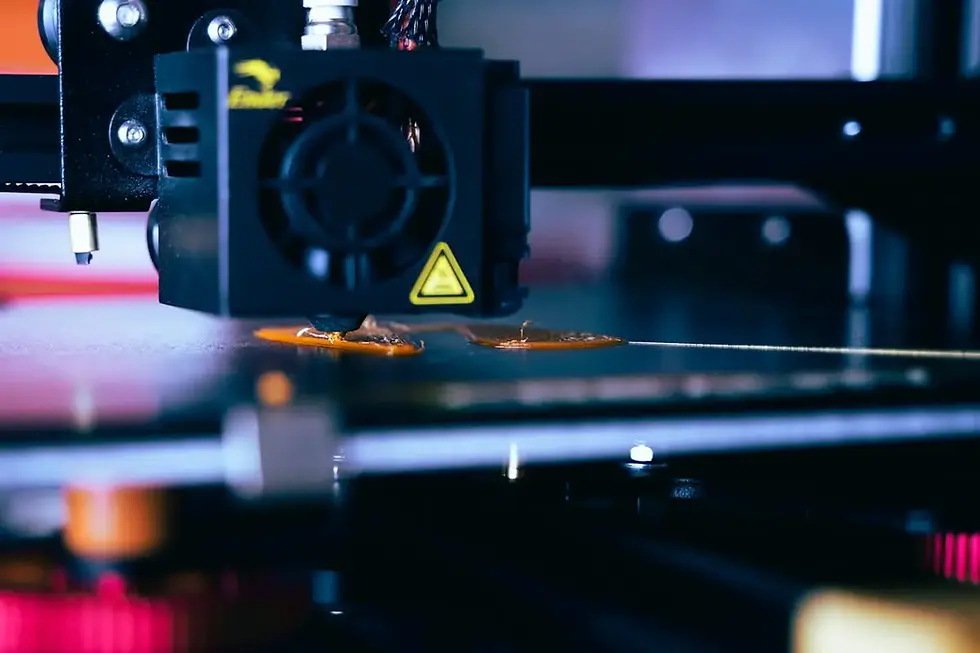
At its core, additive manufacturing is a process of creating objects by adding material layer by layer. Unlike traditional methods that often involve cutting away material, this technique builds products from the ground up, allowing for greater precision and flexibility.
The versatility of additive manufacturing lies in its ability to use a variety of materials, including plastics, metals, and even biological substances. This broad range opens up endless possibilities for innovation and creativity. By precisely depositing materials, the technology enables manufacturers to design intricate geometries and bespoke products that were previously impossible or too costly to produce using conventional means.
Understanding the layers of additive manufacturing also reveals its foundational role in paving the way for more sustainable production methods. By minimizing material waste, it offers an environmentally friendly alternative to subtractive manufacturing processes that are traditionally resource-intensive. This shift not only makes production more efficient but also contributes to reducing the ecological footprint of manufacturing activities.
Benefits of Additive Manufacturing
One of the most exciting aspects of additive manufacturing is its potential to reduce production costs. By minimizing waste and allowing for rapid prototyping, companies can save both time and resources. Additionally, the technology enables unparalleled levels of customization, meeting specific needs of customers with ease.
The ability to produce complex parts on-demand is a major advantage for industries looking to improve their supply chain efficiency. With additive manufacturing, businesses can manufacture components as needed, rather than maintaining large inventories of spare parts. This not only reduces warehousing costs but also streamlines logistics, allowing for faster response times to market demands.
Another significant benefit is the reduction of lead times, which can be cut down drastically when using additive manufacturing technologies. Traditional manufacturing might require weeks or even months to arrange for the tooling and setup needed for production. In contrast, 3D printing allows for immediate production once the digital design is finalized, facilitating rapid iteration and faster product launches.
Additive manufacturing also supports innovation by encouraging experimentation without the high risks and costs associated with traditional failure in manufacturing processes. The concept of failing fast and cheap can drive creative experimentation, leading to groundbreaking innovations and advancements across various fields.
Applications Across Industries
From aerospace to healthcare, additive manufacturing is finding applications in a multitude of industries. In aerospace, the technology is used to create lightweight yet strong components, while in healthcare, it is employed to produce customized implants and prosthetics tailored to individual patients.
In the automotive industry, 3D printing has revolutionized the production of complex parts and the prototyping phase. Manufacturers can now test design modifications with ease, improving the efficiency of the automotive design process while enhancing performance and reducing costs.
The construction industry is also embracing additive manufacturing techniques, often referred to as "printing buildings." This innovative approach allows for rapid construction of structures, reducing the time and labor required significantly. Entire homes can now be printed in a matter of days, showcasing the transformative potential of additive manufacturing in reshaping modern construction practices.
Challenges and Future Prospects
While promising, additive manufacturing is not without its challenges. Issues such as material limitations and high initial investment costs need to be addressed. However, as research and development continue, these hurdles are expected to diminish, leading to broader adoption and innovation.
Addressing the quality control and standardization issues associated with additive manufacturing is another area of focus for the industry. Ensuring consistency in the quality of printed products is crucial for widespread acceptance, especially in industries like healthcare and aerospace, where safety and precision are critical. Efforts to establish standardized guidelines and procedures are underway, paving the way for more reliable and efficient production systems.
Looking forward, the future of additive manufacturing appears bright. Continued improvements in material science are expected to expand the range of materials that can be used in 3D printing. This advancement will not only enhance the durability and functional properties of 3D-printed objects but also open up new applications across different sectors, driving further innovation and growth.
The Future of Production with Additive Manufacturing
Additive manufacturing is proving to be a game-changer in the production world. With its ability to lower costs, increase customization, and reduce waste, it's clear why industries are eager to adopt this technology. As the technology continues to advance, its impact on the production landscape will only grow, paving the way for a future where anything is possible. To learn more about how you can leverage this technology in your production processes, visit i-solids.